
ProgrammesEnvironmentCircular food economy
Less food waste, safer streets, more green work.
Victoria Falls throws away tonnes of food every month, much of it at open dumpsites that elephants visit. Afro Edge, with Pristine Victoria Falls Society and support from WWF, is building a circular food economy that turns that waste into animal feed, compost and jobs for young people.
The problem in numbers
- 80+tonnes of food waste a month projected from Victoria Falls hotels and restaurants, based on a baseline survey of 13 of 134 businesses
- 29illegal dumpsites mapped in January 2024. 28 are in the dense areas of Chinotimba and Mkhosana
- 71.6%of elephant dung sampled near the Victoria Falls dumpsite contained plastic (a 2019 study)
- 28+tonnes diverted from 12 hotels during the one-year pilot in 2025
Why food waste is a wildlife problem.
Victoria Falls is the hub of the Kavango Zambezi Transfrontier Conservation Area, a protected landscape that is home to 227,900 elephants. Tracking of 30 elephants between 2017 and 2022 shows them moving through the city and its edges, and crossing the Zambezi into Zambia.
Food waste dumped in the open draws them in. Two people lost their lives to elephant encounters in the first quarter of 2026, a crisis linked in part to unmanaged food waste at open landfills and illegal dumpsites.
The waste hurts the elephants too. When they eat plastic mixed in with food, it can poison them or make them choke, and as they move on they carry the waste into the national park.
It also threatens the town’s main asset. Tourism is how Victoria Falls earns its living, and visible dumping and conflict with wildlife damage its reputation.
What we found.
In December 2024 and January 2025, with WWF support, a baseline survey covered 13 of the 134 registered hospitality businesses. They produced 5,518 kg of food waste in 25 days. Across the whole sector, that adds up to more than 80 tonnes a month and about 7,000 tonnes of CO₂-equivalent emissions a year.
Almost none of it is recovered. Households matter just as much: 28 of the 29 illegal dumpsites are in Chinotimba and Mkhosana, the same areas elephants cross.
How the loop works.
Cut waste at source
The Hotel Kitchen Toolkit helps hotels measure, separate and reduce food waste, and adopt green menu practices, before anything leaves the kitchen.
Divert what is left
Unavoidable food waste is collected from hotels, restaurants and food outlets and taken away from the dumpsite.
Convert it
At Sizinda, a large-scale vermicompost site turns the waste into organic biofertiliser. A black soldier fly larvae (BSFL) project turns organic waste into sustainable animal feed.
Grow and sell
The Community Youth Hub is being built to run at commercial scale. It is an upcycling facility, an eco-tourism stop and a demonstration garden, earning from compost sales, visitor fees and garden produce.
Measure
Every collection is recorded, so we can track the weight diverted and the carbon avoided on our live dashboard.
What the 2025 pilot did.
In 2025, with support from WWF, Afro Edge worked with Pristine Victoria Falls Society on a pilot. It introduced the Hotel Kitchen Toolkit, sent unavoidable waste to a black soldier fly larvae project instead of the dumpsite, and set up a vermicomposting facility that makes organic biofertiliser.
Over the year, at least 28 tonnes of food waste from 12 hotels were diverted. That reduced the impact on the environment and opened the door to new green businesses.
See the live dashboardInside Sizinda.
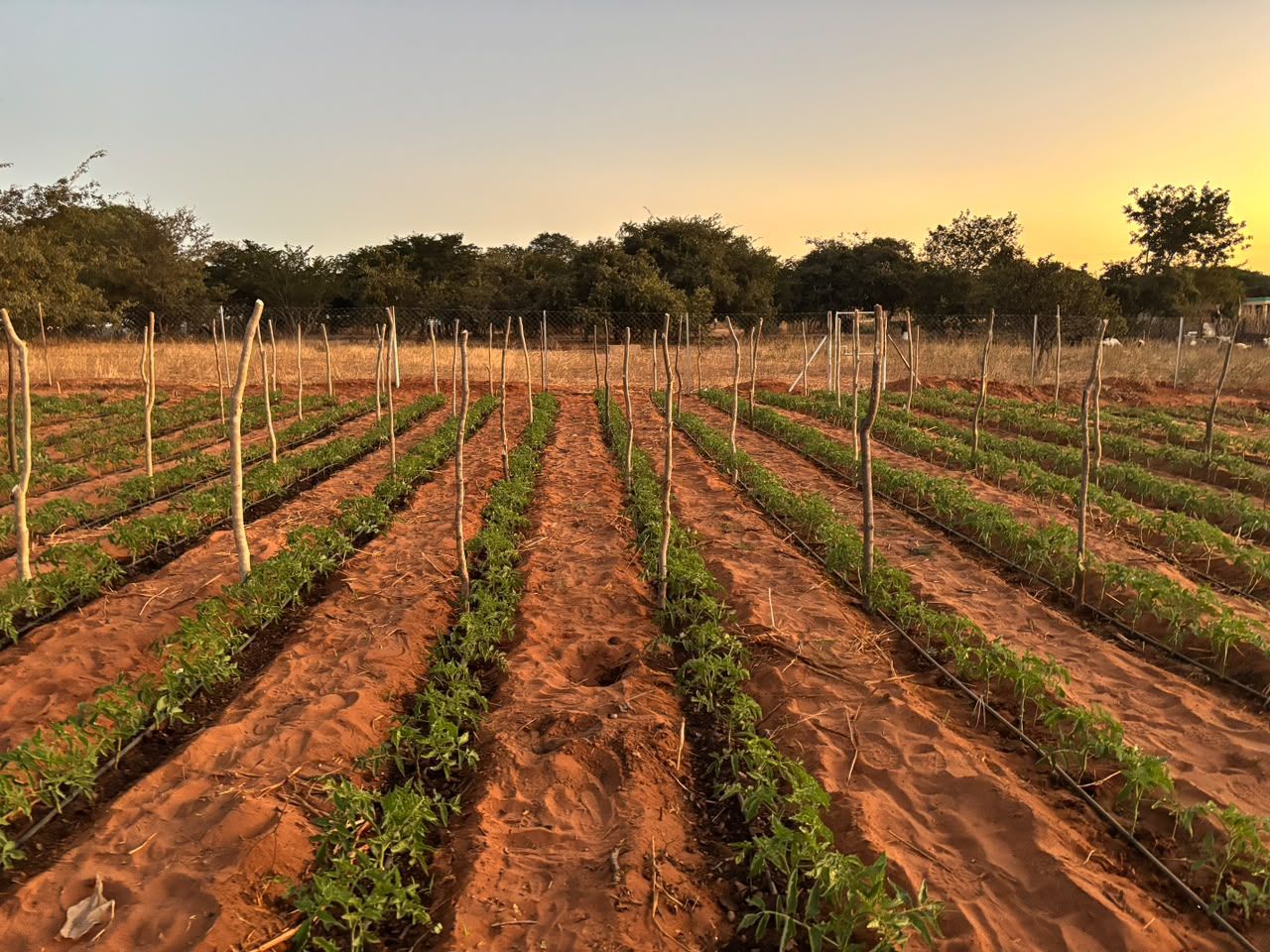
Sizinda is where the loop lands. Food waste from Victoria Falls kitchens arrives at the compost bays, and young people grow organic produce in drip-irrigated plots on the same site.
See more photos from Sizinda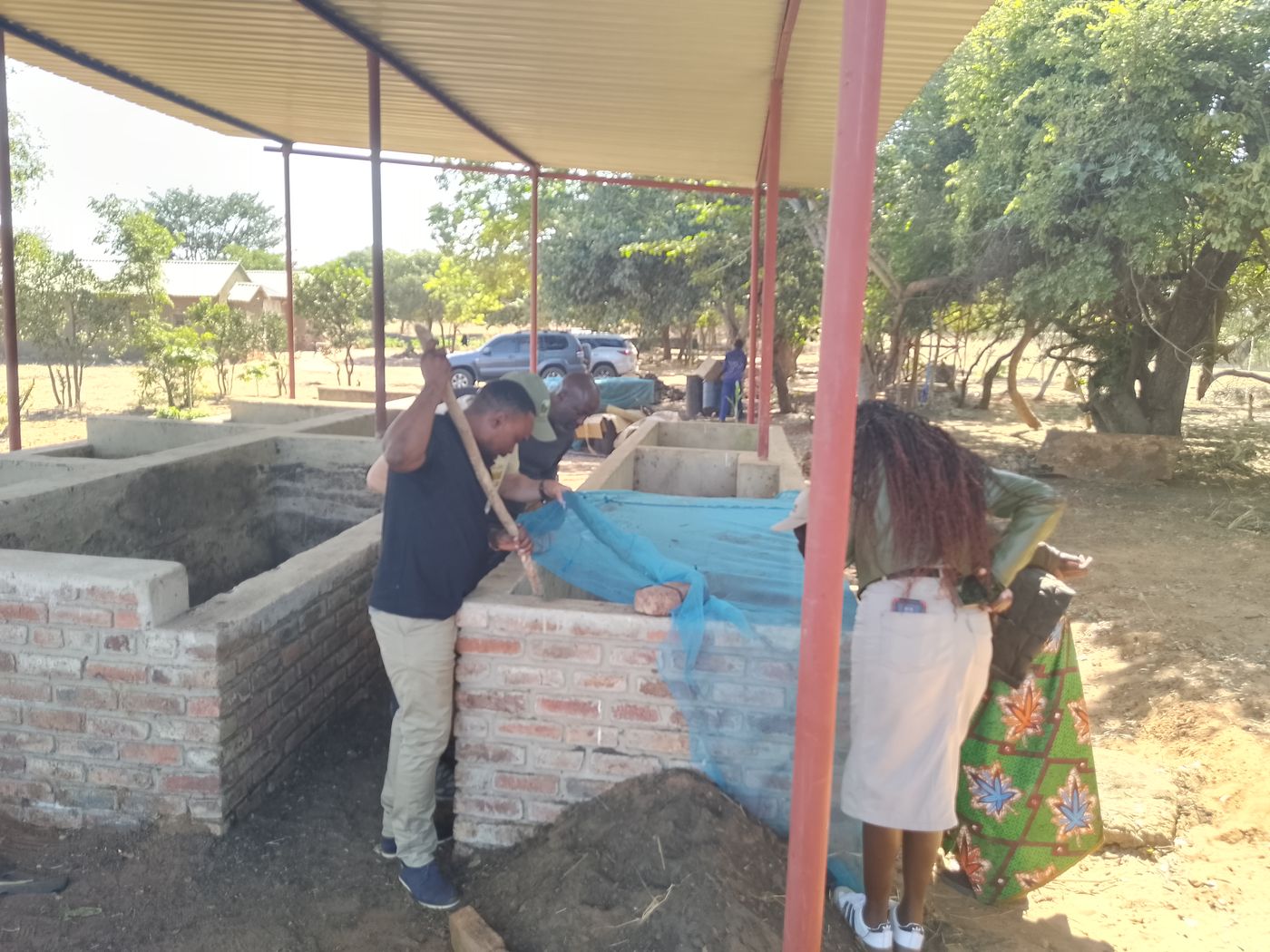
At the compost bay 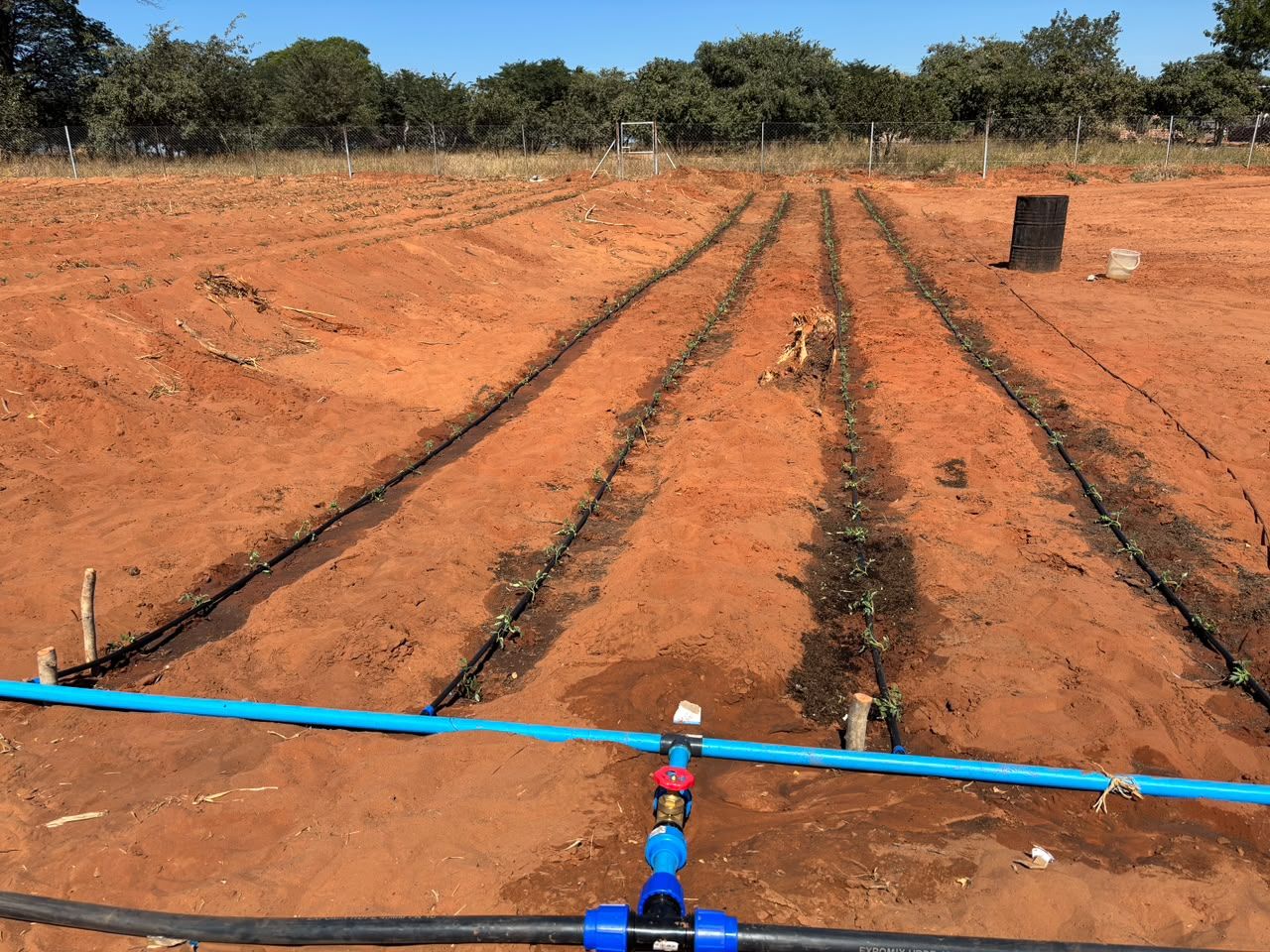
The irrigation system 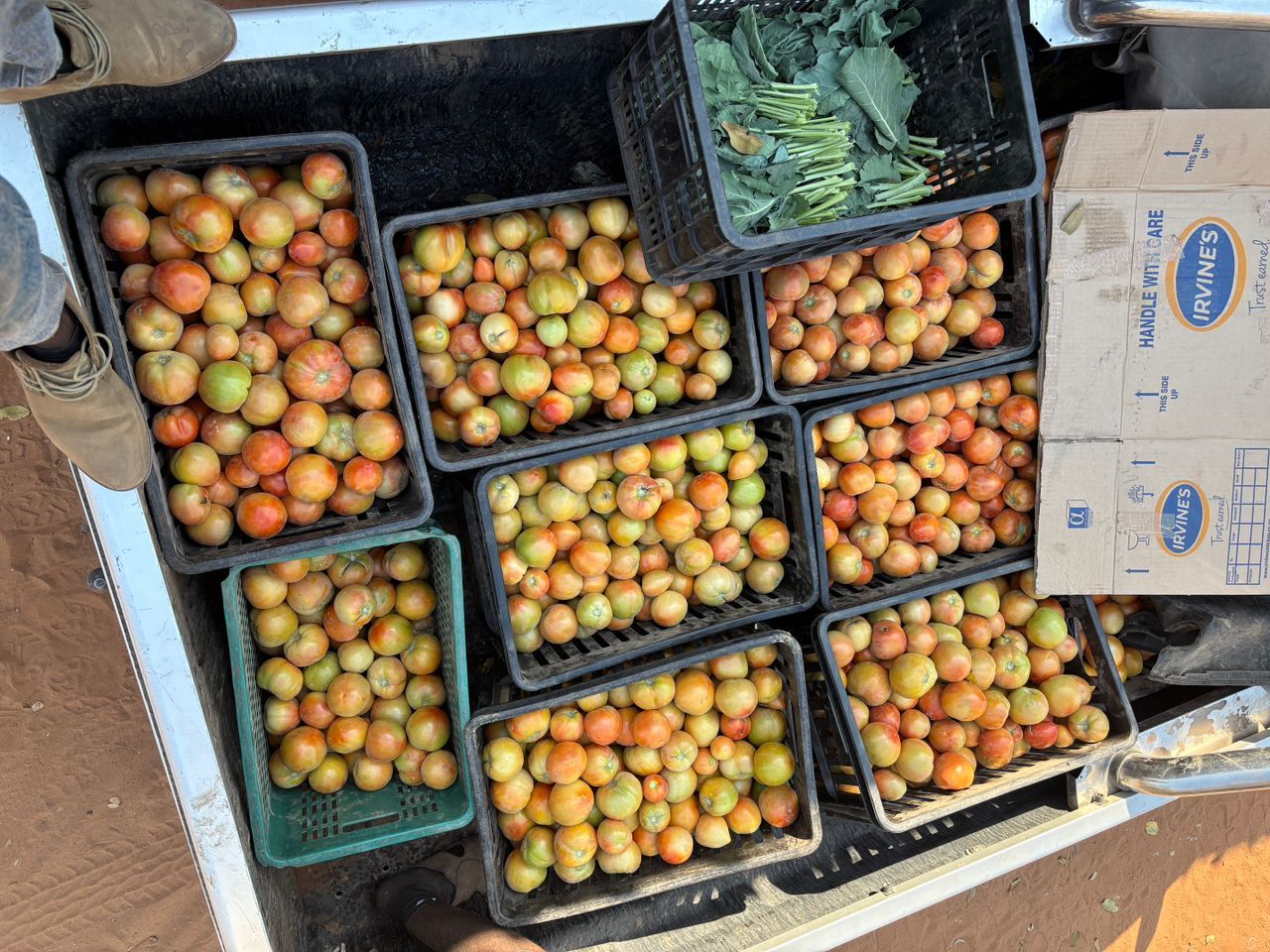
Harvested tomatoes
What stands in the way.
Good intentions are not enough. These gaps are what the project is built to close.
No incentives or reporting for hotels
The hospitality sector has no certification or reporting framework that rewards good waste practice.
No way to separate waste in the city
Municipal systems do not support separating or diverting food waste, so one hotel’s effort is hard to sustain on its own.
No rule and no pathway
Separating waste is not mandatory, and there is no structured route for turning organic waste into something useful.
Households are out of sight
The high-density areas where most dumpsites sit have little data, infrastructure or ways to divert food waste.
No money to scale
Without new ways of financing the work, the current system cannot sustain itself.
Our theory of change
A model other cities can copy.
If
Young people and businesses in Victoria Falls are equipped to target, measure and divert food waste. The rules, management and policies they need are in place. A business plan backed by financial institutions unlocks green jobs.
Then
Up to 80 tonnes of hotel food waste each month goes into regenerative agriculture and valuable by-products, and methane emissions fall in a way we can measure.
Because
Young people, households, hotels and municipal leaders act together, on a model built to last and to be copied by other small and medium-sized cities in Africa.
A circular food economy that pays for itself.
Young people, households and the hospitality sector reduce, measure and divert food waste, cutting pollution, creating green jobs, easing conflict with wildlife and tracking the carbon footprint.
Households know what to do
In Chinotimba and Mkhosana, households understand how to handle food waste and why it matters. A youth-led campaign, Food Isn’t Trash, runs through schools and community networks.
Hotels adopt the toolkit
The hospitality sector uses the Hotel Kitchen Toolkit to measure, separate and cut food waste, and strengthens its sustainability record.
The Youth Hub pays its way
The Community Youth Hub runs at commercial scale as an upcycling facility, an eco-tourism stop and an organic demonstration garden, earning from compost, visitor fees and produce.
Join the loop.
Everyone in Victoria Falls has a part: kitchens, classrooms, councils, households and funders.
Take part
Hotels, lodges and restaurants
Use the toolkit and join the collection route.
Partner with usTake part
Schools and youth groups
Take Food Isn’t Trash into your school or club.
Get in touchTake part
Funders and investors
Back the business plan and the Community Youth Hub.
Talk to usTake part
Everyone else
Give to the programme, or volunteer on the compost site.
Donate
Help keep the food, and the elephants, where they belong.
Delivered with Pristine Victoria Falls Society. The 2025 pilot was supported by WWF.